It appears the will go right down to the trade deadline wire before gaining clarity on ’s playing status.
The №1 goaltender received positive news in a follow-up appointment with doctors on Thursday, according to head coach Sheldon Keefe, but there’s still no timeline on when Andersen is expected to return from his lower-body injury.
“The feedback I’ve been given is that he is progressing well,” Keefe said after practice in Winnipeg. “I guess we’ll continue to monitor him and reassess him next week.”
Frederik Andersen is “progressing well,” according to Sheldon Keefe. His status will be reassessed next week.
— Chris Johnston (@reporterchris)
Andersen hasn’t skated since allowing four goals on 18 shots during a 4–3 loss to Calgary on March 19. The veteran acknowledged that he was playing through injury at that time and took the loss in five of his seven March appearances before getting shut down.
“I’m not really where I want to be, obviously,” Andersen said the day before facing the Flames. “I think I’m working towards just getting as good as possible.”
Jack Campbell has taken the ball and run with it in Andersen’s absence, but has been managing his own lower-body issue. After being unable to play Monday, he stopped 26 shots in Wednesday’s 3–1 victory over the Jets.
With the trade deadline looming on April 12, Leafs general manager Kyle Dubas must decide whether to use any of his limited cap space to acquire more goaltending depth.
That would be easier if Andersen wasn’t expected to play before the regular season finale on May 10 because his $5-million cap charge could be placed on long-term injured reserve, allowing the Leafs to exceed the cap ceiling but he’s believed to be trending towards returning to health sooner.
It’s not imminent, however.
Andersen remained in Toronto while the team embarked on a four-game road trip that is scheduled to see them play Sunday and Monday in Calgary after Friday’s game against Winnipeg.
“He’s not going to join us on this trip,” Keefe said.
Coca-Cola Chinese New Year campaign in Ox. Who doesnt like CNY?
Coca-Cola has launched a heartwarming Chinese New Year campaign to ring in the Year of the Ox.
Produced by , CNY Confessions features teenagers in China sharing heartfelt stories about what really matters this time of the year. Especially in the era, simple joys such as sitting together for a meal or gathering with loved ones have become more important than ever.
The clip begins with three young individuals — Meiling, Xiaoming Wang and Little Piggy — who are disgruntled about having to endure the yearly Chinese New Year tradition.
Meiling expresses detesting when relatives crowd inside her home, Wang confesses to how he prefers playing video games as opposed to being a designated family delivery boy, and Little Piggy says she dislikes the long and bumpy bus rides he has to endure in order to go back to his village.
In time, they confess their true feelings about these little moments in life.
“Many Chinese youth once saw Chinese New Year as an obligation, a routine. In 2020, COVID-19 changed all of this, taking away something that many youths once took for granted, and inspiring a shift in perspective of what truly matters — family, friends, connection and love. As a brand that stands for togetherness and optimism, we saw this as an opportunity to ignite the values of our brand, by capturing these confessions in Chinese youth within our film,” said Bassam Qureshi, Coca-Cola Head of IMX.
“We spoke with Chinese youth to ensure we were capturing authentic stories in our film, and in doing so, realized that their yearning to reunite with family this Chinese New Year wasn’t about the big celebrations, but the little simple joys found in the normalcy that bring us together,” added Cia Hatzi, McCann Worldgroup chief client officer for Coca-Cola.
To reinforce the importance of little moments between families, Coca-Cola China has incorporated clay dolls A Fu and A Jiao as little helpers in the campaign’s advertisements and packaging.
Coca-Cola young individuals — Meiling, Xiaoming Wang and Little PiggyCoca-Cola China clay dolls A Fu and A Jiao as little helpers
01/ Use a colour overlay on images with text
If you’re using text on a crappy image, try using it more like a background by overlaying the brand colour at a semi-opaque setting. This will give you the necessary contrast to make text readable.
02/ Don’t over do negative space
When there’s excessive negative space between elements that belong together, the eye stutters and falls into empty voids instead of easily flowing over connected elements.
03/ No one likes a word salad
Anyone who has looked at website analytics knows you have a very small amount of time to grab someone’s attention. Get to the point.
04/ Even text only layouts should be visually appealing
Text only sections of a landing page can be hard to design, especially if you can’t see a way to use illustration, icons or photography. Look to your brand colours and typographic details as quick wins to lift your design.
05/ Icons small, illustrations big
Icons are simple by nature and should play a supporting role. Blow them up big and now you just have a bad illustration. If you’re using an icon with a title, you’ll want the title to pop out first.
06/ Use letter spacing sparingly
If you’re not an experienced typographer stick to only adding a bit of letter spacing to your all caps titles. Adding extra letter spacing to sentence case text can create issues with readability.
07/ Watch your line lengths in FAQs
The FAQ section is probably the web’s no.1 culprit in terms of egregious line lengths. Optimal line length is between 45 to 75 characters, including spaces and punctuation.
08/ Show me the value
In this example, the real value proposition was hidden in a barely readable subtitle. There was also an easy opportunity to add authenticity to the social proof by adding the faces of real users.
09/ No one likes tiny text
On this website, variable web typography was used in the CSS, creating scenarios where body copy was 11px and navigation links 9px. Browser defaults of 16px font size are 20 years old — start body copy at 18–20px.
10/ Apply the rule of odds
Layouts pack more of a punch with an odd number of elements. If you have 4 points to make, trying saying the same thing in 3 by combining 2 points together. If that’s not possible, prioritise your points and cut the weakest.
11/ Manage cognitive overload
Combine and reduce your points where possible. Create contrast in size between titles and copy to improve the visual hierarchy, and use negative space to create a calmer experience when you have a lot to say.
12/ Use bright colours as an accent
Using bright colours in large areas is going to run you into contrast issues, potentially failing basic accessibility requirements for your text. On smaller elements like buttons, you’ll probably need to avoid white text.
13/ Always check the contrast of grey text
Using grey text is a popular technique to create hierarchy between text elements. But this often leads to serious accessibility issues with text lacking sufficient contrast. Use an online tool to check contrast, and increase contrast in font sizing if you need to establish a clearer visual hierarchy.
Et voilà!
If you liked this article, you may like — a monthly email sharing design insights and the startup journey.
And if you’re feeling social, a retweet or like on the would be much appreciated!
It has been some time since Flickchart has reviewed a new wide theatrical release. With the COVID-19 pandemic raging, the movie exhibition situation has been far from ideal. But with theaters starting to reopen in a larger way, Disney has pushed to theaters and Disney+ streaming simultaneously, and we’re here for it!
The newest movie from , Raya and the Last Dragon takes place in the fictional Asian nation of Kumandra, which divided between five tribes in the wake of a devastating supernatural war. Dragons defended humanity from a consuming force known as the Druun. Most of the dragons were defeated while holding the Druun at bay. Only one piece of dragon magic remains in the world: a magical stone.
Raya lives in the tribe of Heart, where her father invites the other tribes in an attempt to forge peace. But discord and lack of trust causes the stone to split, which allows the Druun to come back and turn nearly everyone to stone. And that’s just the intro.
After this epic opening segment, there is a substantial time jump, and Raya emerges as a young adult determined to revive the last dragon and undo the ravages of the Druun.
As always, Disney does a great job setting up a vibrant new fantasy world. The characteristics of the five tribes are simplistic, but they are a neat and fairly seamless way of introducing children to different aspects of Asian culture.
Raya’s quest is a metaphor for building trust and unity in a discordant world. It doesn’t take a genius to see the parallels between the film and contemporary politics, where it seems like different tribes of people are constantly at each other’s throats. Disney seems to suggest that unity and peace can be achieved if we can learn to trust one another again — and believe in a little Disney magic in the form of the dragon Sisu, voiced by the wonderful . While the messaging may be a tad obvious at times, it’s still good storytelling, and well-realized characters mostly make it work.
is great in the lead role of Raya. She brings a strong force to the lead and is a believably a flawed protagonist. She struggles with trust issues, understandably, and her process of learning from the very trusting Sisu feels real. Even after constant betrayals, the film keeps its faith in the notion of trust, and is all the better for it. Raya gradually gathers a group of vagabonds from various tribes as she journeys across the land gathering pieces of the broken stone.
The movie bears some familiar hallmarks of modern children’s entertainment, which too often doesn’t trust children’s maturity. There are some goofy hijinks that belong to a lesser movie, such as the Minion-like monkeys that accompany a baby hero from the Talon tribe. These purely silly touches feel out of place in an otherwise rather mature story.
Raya and the Last Dragon has a real sense of stakes. It isn’t afraid to get fairly dark in segments, a decision that hearkens back to kids’ films of the 80s like and , and the movie doesn’t short-change its central conflict. It almost stands as one of Disney’s best adventure films period.
Unfortunately, the film sticks just a tad too close to formula to become truly transcendent. Still, it’s a very well-made work and its script is solid. The animation is gorgeous, though one still might be missing the hand-drawn look of earlier Disney fare. The colors are vibrant and all of the characters are expressive. The film features a great Asian-American, and the story might be just what the world needs to see playing in theaters right now.
Tell us your thoughts below and rank on your Flickchart today!
In March 2020, South By Southwest was one of the first major global events to cancel because of the COVID-19 epidemic. It was a real blow to ticketholders, artists, and the city of Austin, but of course it was only a sign of things to come.
A year later, SXSW finally returned, but in a new form. The 2021 festival was online-only. It was better than nothing, and actually had its advantages for this reviewer, but people did miss the camaraderie of in-person events and the vitality of downtown Austin and its many venues.
The 2021 film slate was strong in spite of the difficulty of producing content in 2020. Here’s our ranking of 18 features, in ascending order:
18.
Offseason struggles through a thin metaphor about a tourist trap town that goes “dead” in the offseason, after the boys of summer have gone. There isn’t an original beat in it, but it’s almost worth watching for a strong supporting performance by (Boogie Nights, Magnolia). She’s a recently deceased Hollywood actress who hails from an island village that harbors a dark secret. Her daughter () uncovers the mystery all too quickly when she visits the island for the first time to tend to her mother’s grave. The townies feel off right from the jump, except for the one whose role is to provide exposition that the dead actress already provided in flashbacks. The daughter zips through an arc from skeptic to believer that culminates in a lackluster flash of Lovecraft lite. Reviewer ranking: 2628/3087
17.
A, forgive me, dormant documentary about a significant yet short-lived recording studio on the Caribbean island of Montserrat. Some of the greatest tracks of the late 1970s and early 1980s were recorded there, including Dire Straits’ monumental Brothers in Arms album as well as material by Elton John, The Police, The Rolling Stones, Jimmy Buffett, Stevie Wonder, Paul McCartney, and more. Artists and former employees of the studio reminisce about the days of free-flowing booze, great music, and sunny vistas, but there’s a sense that you really had to be there. It came to an end in a one-two punch of hurricane and volcanic ash, and the documentary crew received special permission to film at the ruined studio that sits inside the island’s uninhabitable exclusion zone. The music and stories are pleasant enough for fans of boomer rock, but the concert DVD Music for Montserrat that raised money for the island after the eruption is still the best movie on the subject. Reviewer ranking: 2388/3087
16.
A between two old lovers, one of whom has since transitioned, aims for brutal emotional honesty but ultimately feels pat and manufactured. It takes place over the course of a night in a restaurant, bar, backyard, and art studio in the college town where Kris (Pooya Mohseni) and Naomi (Lynn Chen) dated during their student days. Naomi now works there as a professor while raising her two children, and the visiting Kris hopes to reminisce about the good times they had without talking about the painful way it ended. Kris’s stories about discovering her gender identity and learning to live as a woman are touching, and what Naomi cautiously reveals about her frustrations with career and family are relatable and sometimes heartbreaking. Unfortunately the movie takes too long to get to the core of these characters and their conflict, and when it does it abandons verisimilitude for melodrama and unlikely coincidence. An unearned epilogue suggests a vision not fully realized, which at least mirrors the way the two characters feel about their lives. Reviewer ranking: 2394/3087
15.
Creators respond to the world around them and work with what they have, so it’s no surprise that there are a couple of stories on this year’s South By slate. The most modest of them is The End of Us, about a young couple who breaks up on the cusp of lockdown and has to quarantine together for the next several months. It’s an exceedingly realistic, small-scale drama dotted with Zoom dates, furloughs, bread-baking, mask-making, dog adoption, socially-distanced walks, and other day-to-day markers of the era. Actors Ben Coleman and Ali Vigniano are believable and likable as two people making mistakes and working on themselves in a time of restrictions. If their COVID-era story is ultimately forgettable, it’s because it is so normal. Movies like The End of Us will be valuable time capsules for future viewers who want to get a sense of what 2020 was like for many people. Reviewer ranking: 2681/3087
14.
Violation is a disjointed revenge narrative centering on two English sisters and their significant others. The younger sister’s husband owns a lot of land in the American countryside — beautiful, misty, forested land which the camera highlights in generous macroscopic and microscopic shots. With equal patience and reverence, the movie details a murder and its grisly aftermath, but a scrambled and incomplete storyline leaves too many questions unanswered. Madeleine Sims-Fewer co-wrote, co-directed, and stars as the elder sister determined to be her sibling’s “white knight.” Her character’s is fairly compelling, but there isn’t enough payoff for the work the movie asks us to do to understand it. People who prefer their horror extreme will find certain moments riveting but many more tedious, whereas viewers with a more psychological bent will find a lot of smoke and not much fire. Reviewer ranking: 2347/3087
13.
Maybe the sweetest movie on the 2021 SXSW docket, Swan Song stars septuagenarian character actor as a retired hairdresser who was once a local legend and gay icon in Sandusky, Ohio. When one of his former clients dies, he escapes the nursing facility he has lived in for some twenty years and slowly makes his way to the funeral home to fix her hair for the big send-off. Along the way he discovers a reviving that he no longer knows, and that no longer knows him. Swan Song often requires you to suspend your disbelief — for example, that the protagonist would happen to visit his favorite old dance club on the very night of its final drag show — but Kier’s blend of flamboyance and grief is grounded enough to keep viewers invested. The movie is a valentine not only to a real-life “Liberace of Sandusky” whose picture we see in the closing credits, but to an unsung generation of gay men who spent their lives in small towns where acceptance could be fickle and contingent at best, and where friendships could make the difference between hope and despair. Reviewer ranking: 2381/3087
12.
It’s getting harder and harder to dismiss as exaggerations, and after 2020 few would make that mistake with Executive Order, wherein Brazil’s government begins forcibly deporting “high-melanin” citizens to Africa. The movie follows two well-off black Brazilians, a lawyer () and his pregnant wife (), as the faceless soldiers of a patronizing white government abducts their neighbors, family members, and friends. The movie is billed as a thriller and a resistance film, but it’s too slow and overly-wordy for that, and is more comparable to the one-man-against-the-system fantasies of the 1970s like …and Justice for All and Network. It replaces the grainy shadows of those movies with eye-popping, super-wide frames that juxtapose color and chrome, diversity and sterility. Some cultural details and turns of phrase are lost in translation, but the central idea is terrifying universal in an era when borders are closing and nationalism and white supremacy are surging. Executive Order is not only a good-looking movie, but a timely warning. Reviewer ranking: 2487/3087
11.
If you live in a major city, there’s a decent chance you’ve seen a skyscraper with the WeWork logo plastered on its upper floors. You may have dismissed it as just another trendy tech startup, or if you watch financial news you might remember its abortive IPO rollout and subsequent bankruptcy. What you probably don’t know is the extent to which WeWork was not really a business at all, but a cult of personality that ensnared celebrities, venture capitalists, and a lot of wide-eyed young people with more to lose than they knew. The details the toxic, messianic psychology of former CEO Adam Neumann and his crunchy, new-age wife Rebekah, and traces the boom and bust of the business they said could “elevate human consciousness” by renting desks. Investigative journalists have done a lot of that legwork already in the wake of WeWork’s headline-grabbing fall from grace, but the documentary distinguishes itself in its decision to spotlight young employees who gave up jobs, homes, and relationships for the communal and controlling WeWork lifestyle. The documentary’s weakness is that the story isn’t over yet. Though ousted from WeWork, the Neumanns have recently been trying to convince parents to place their children in a system of bizarre, for-profit schools under the cringy banners of WeGrow and SOLFL (Students of Life for Life, pronounced “soulful”). A sequel seems sadly likely. Reviewer ranking: 1925/3087
10.
The coolest and creepiest concept in a South By film this year belongs to Broadcast Signal Intrusion, a fine study in paranoia and obsessive pattern-finding. stars as “James,” probably not his real name, who comes across an unsolved media crime that may be linked to his wife’s apparent suicide several years before. Over a period of many years, a tech-savvy prankster hijacked local TV signals in order to air creepy homemade videos that may have contained subliminal messages regarding the disappearance of several women. James combs through old VHS cassette tapes and obscure message board posts from hobbyists who collect these “broadcast signal intrusions,” the most unsettling of which are known as “the Sal-E Sparx incidents.” A series of mysterious strangers guide James on his search for the twisted mind behind Sal-E Sparks and the truth about his wife. Moody and haunting, Broadcast Signal Intrusion shows director Jacob Gentry’s command of the style, but whether its unanswered questions are a feature or a bug depends on the viewer’s own tolerance for going down rabbit holes. Reviewer ranking: 1699/3087
9.
this touching, smart, funny movie that takes place entirely over Zoom, but not because of COVID, which makes it a bit more timeless than the pandemic-specific titles above and below it on this list. Morales plays a Spanish tutor, and , who co-wrote the script, is a slightly neurotic man whose husband bought him 100 weeks of online Spanish lessons as a surprise birthday gift. There’s a very early twist that shouldn’t be spoiled, but once it hits we are immediately invested in both characters, who get to know each other exactly as we get to know them: over a screen, a few minutes at a time. Language Lessons is as small-scale as it gets, but its intimacy and focus serve it well, and it has much to teach us about trust, friendship, loss, and Spanish. Reviewer ranking: 1570/3087
8.
Hysterical is the ideal documentary about comedy. It is very thorough in its exploration of its topic — women who do and the unique challenges they face — and at the same time it is very, very funny. Hysterical spotlights current and rising stars like Kelly Bachman, whose in-person takedown of Harvey Weinstein at a New York comedy club made headlines in 2019, but also their predecessors, from established acts like Kathy Griffin and Margaret Cho to pioneers like “Mobs” Mabley who transgressed barriers in the 1950s and 60s. Clips from recent and older shows are delightful, but the sit-down interviews with the younger generation of women are the real takeaways. They are all the funnier for their unblenching honesty about what it’s like to be a woman in the stand-up industry, and director doesn’t shirk from calling out some of the male titans of the genre for perpetuating a boy’s club mentality. To be funny while speaking the truth is a conceit of stand-up, and Hysterical proves its power. Reviewer ranking: 1480/3087
7.
Paul Dood is an underdog and doesn’t know it. “I can act, I can sing, and I sure as shit can dance,” he tells his audience of two on a streaming site called TrendLadder. The middle-aged Dood () works a dead-end retail job and looks after his dying mother, but he has a plan to hit the big time by entering Britain’s trendiest internet talent show, hosted by the hilariously fake Jack Tapp (). Unfortunately it all goes wrong for Dood, who can neither act, nor sing, nor dance, but that’s not the worst of it. On his way to the audition, seemingly every person he encounters goes out of their way to obstruct him, from an officious railroad employee to a corrupt priest to a wanna-be samurai, all played by archly funny English character actors. It’s all too much for Dood, so he embarks on a lunchtime vendetta that, despite his fecklessness, threatens to make him infamous as well as internet-famous. This fast-paced, soft-hearted was a festival favorite and could be destined for cult-classic status. Reviewer ranking: 1626/3087
6.
Potato Dreams of America feels like a work of unbridled creativity, so it’s always surprising to remember that it’s based closely on true events. Nevertheless, the movie is not content to be a mere autobiography, and writer/director Wes Hurley experiments freely with actor changes, style changes, and tone changes. It’s an effective way to illustrate a young life punctuated by abrupt and dramatic shifts. The first and biggest one is the fall of the Soviet Union, where young Potato spent his childhood. The next is his move to the United States with his mother, who works hard to become a mail-order bride. Along the way Potato discovers both Jesus and his homosexuality. Each twist comes with its own aesthetic, sometimes nearly theatrical and other times heavy on close-ups and montage, but always darkly, weirdly funny. Potato has a unique window on the world, and his movie is eccentric and personal enough to do it justice. Reviewer ranking: 909/3087
5.
If you’re going to make a three-and-a-half-hour documentary on horror movies, it had better be damn near encyclopedic. Writer/director Kier-La Janisse’s Woodlands Dark and Days Bewitched: A History of Folk Horror is as close as you can get to a visual encyclopedia of a certain mode of horror moviemaking. The topic is handled clinically, but not without love. “,” a subgenre of movies involving pagan rites, rural cults, ancient gods rising from cornfields, and so forth has clear connections to real-world political and social movements and long-term economic trends, and the movie’s interview subjects describe those connections clearly and authoritatively. But this is not a dry, bloodless lesson in film analysis. It is an organized onslaught of evocative, haunting, bizarre, funny, beautiful movie clips, each illustrating some facet of folk horror. For movie obsessives (if you’re still reading this and aren’t related to me, that’s you), this is like opening a treasure chest that contains a lost tome that gives you a riddle that leads to a maze that contains the secrets of the universe at its center. It’s a comprehensive list of 234 essential folk horror movies, organized more or less geographically and chronologically — a watchlist that could feed your obsession for a long, long time. The first and best section of the documentary focuses on the flourishing of the genre in England in the 1960s and 70s. This is followed by sections on American folk horror and international folk horror. There are things you’ve seen and things you’ve never heard of but instantly know you need to find. Many documentaries include calls to action, and the call here is to watch more movies; how could we not love it? Reviewer ranking: 893/3087
4.
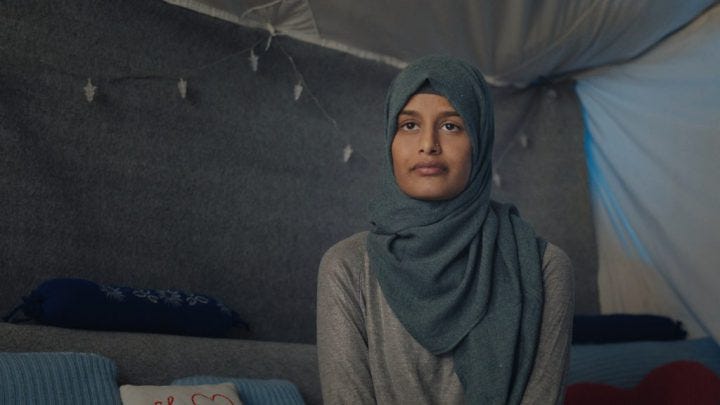
Maybe sympathy is a finite resource. That’s the charitable interpretation of why politicians, the media, and ordinary people in the USA, Canada, Britain, the Netherlands, Germany, et al. decided to despise, disown, and forget the mostly-teenaged girls who left home to become “brides” of ISIS. They were kids, usually children of immigrants, who did not feel at home. They fell prey to internet propaganda, something few of us can honestly say we have never done. They went to the caliphate expecting a paradise. They found slavery, rape, disease, and death. They have paid dearly for their naivety. Their surviving children are paying for their young mothers’ naivety as well. The long-suffering Kurds look after these ISIS widows and their kids, running the dangerous, dirty camps where the now-stateless women are confined. The women’s home countries have stripped them of their citizenship and defined them as terrorists, refusing to acknowledge the degree to which they were victims of ISIS, psychologically and physically. A selection of women bravely share their stories with each other, with their Kurdish administrators, and with the crew — stories that could expose them to reprisals within the camps; stories that, however horrifying, are unlikely to move the hard-hearted residents of Europe and America who have decided that some people, however young, however brutalized, are not worth forgiveness or second chances. It takes a special kind of hope to put this documentary into the world, and I hope it pays off. Reviewer ranking: 587/3087
3.
Think about your favorite comedies. Do you think the actors really liked each other? How long had they even known each other? Whitney Call and Mallory Everton have known each other for a long time, and it shows. Watching their characters riff feels like spending time with your best friends on your best day. It must be nearly as natural and effortless as they make it look, because they wrote and produced this COVID-inspired road trip movie in only eight weeks (“I don’t recommend it,” one said in the online Q&A). The pace of the jokes, the way they flow into each other, the ease of each pivot from silly to witty to irreverent, is something you just can’t fake. The result is not only hilarious, it’s aspirational. I had so much fun with these characters and their journey (it involves mice, a nursing home, a dick pic, roller skates… you just have to see it) that I watched the movie twice, which I have never done during a festival. I can’t wait to see what Everton and Call do next. Reviewer ranking: 191/3087
2.
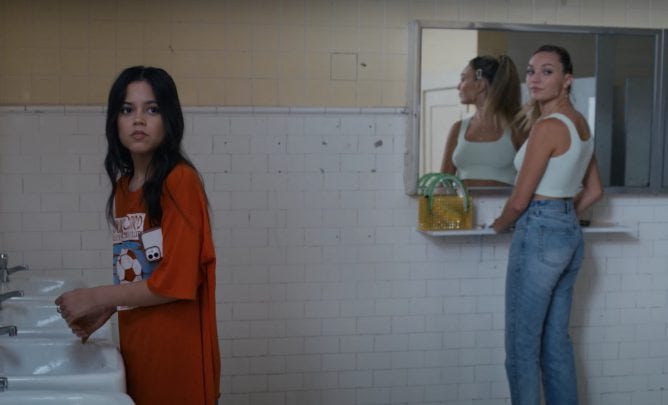
After a , we usually learn a couple of names: that of the shooter, and that of the “spokesperson,” the survivor who faces the cameras or logs on to Twitter to remind an increasingly numb populace that thoughts and prayers are not enough. We forget the names of the victims quickly, and we never know the names of hundreds or thousands of anonymous survivors. The Fallout is a reminder that those unknown kids and their pain matter, too. In this fictional movie about a very real topic, two such survivors are Vada () and Mia (), girls from different social circles who huddle together in a school bathroom during an active shooter event. Vada thinks she’s fine because she can control her emotions. The deeply wise screenplay, and a therapist Vada’s parents make her see, know that that’s not really true. To avoid feeling unpleasant feelings, Vada and Mia retreat into their own world, cutting off former friends and family members. What they give each other is valuable, if frightening and confusing to others and sometimes to themselves. Yet there is also value in reconnecting with oneself and one’s community after coming face to face with life’s fragility. Going through that arc with Vada is, if not a pleasure, then a balm, thanks to ‘s excellent writing and direction. The Fallout is a hard but validating movie that feels authentic to an experience that nobody should ever have. Reviewer ranking: 266/3087
1.
A once-in-a-generation masterpiece of myth- and hero-making, The Spine of Night is more than just a great movie. It is the kind of movie that will inspire new artists and set a new bar for their work, particularly in the arena of animation. “Hyperviolent,” adult, racially diverse, and feminist, it is like the promise of Ralph Bakshi, Gary Gygax, Conan, He-Man, and Xena fulfilled and given new intensity and purpose. The voices of and anchor a cast that also includes , , and , but it’s not a movie about individuals. Good or evil, strong or weak, each character is only a piece of a larger story that extends beyond the runtime of the movie. The Spine of Night has images, ideas, and worlds to spare; a scene midway through in which a mage and warrior battle atop a citadel as a great eye opens in the sky would be the centerpiece of a lesser movie, but here it is only foreshadowing. Occupying a realm beyond criticism, The Spine of Night is nothing less than a new touchstone. Reviewer ranking: 117/3087
As these movies become more widely available, you can rank them on your own and influence their position on the global chart.
The post first appeared on .
EU-compatible drone regulations came into effect in Hungary in 2021. If you plan on flying a drone in Hungary it is essential to be familiar with these laws. Since Hungary is part of the European Union (EU), drone regulations formulated by the European Union Aviation Safety Agency (EASA) will also apply in Hungary in addition to its own set of rules. Read more about the .
Classification of Drones
Hungary classifies into four types based on their weight. Both commercial and recreational drones are subject to strict codes of conduct. However, the legal fees for recreational drone operation may cost little to none. The categories of drones are:
Below 250 g (exempt from regulations).
Between 250 g & 2 kg
Between 2 & 10 kg
Above 10 kg
Regardless of the drone category, every drone operation requires a valid license and insurance in Hungary.
Hungarian Airspace
Drone pilots can only fly their drones in Temporary Designated Airspace. There is no official airspace map released by the government. However, a private organization called created a 3-color scheme flight map for Hungary. The map has divided the country’s airspace into three parts:
Red: Temporary Designated Airspace. The red zones are the temporary zones where drones can be operated with prior permit from the Military Aviation Authority.
Blue: Airport Controlled Zones. Drone pilots must avoid flying in the blue zones, at least not without valid permits.
Green: National Park Zones. These are environment protection zones. Although recreational drone operations may be permitted in the green zones, commercial drone operations will cost 65€ to obtain the license.
Flight Map by Legter.hu | Drone laws in HungaryThe 3-color flight map by Legter.hu
How to Obtain a License
To obtain a license to fly your drone, you are required to submit an application to the Military Aviation Authority at least 30 days prior to the flight. The application is generally processed under 3–4 days. Reach out to [email=rpas@nfm.gov.hu” target=”_blank” rel=”noreferrer noopener]rpas@nfm.gov.hu[/email] for more information. The application must include:
Identity and Contact details of the applicant
Coordinates and radius of the drone operation
Altitude limits of the operation
Date (YYY.MM.DD) and time of the operation
Purpose of the drone operation
Name and phone number of the person who is responsible for air traffic coordination in the required airspace ( An Air Traffic Control Officer)
Costs Involved: Recreational licenses are free of cost while commercial flight permits can cost up to 10€.
General Rules and Drone Insurance
Hungary has fairly simple drone regulations. However, there are some general rules every drone pilot must adhere to at all times:
Steer clear of airports, prioritize manned aircrafts and land your drone if you see one in the vicinity of your flight path.
Fly in visual line of sight and below 120m in daylight
Do not fly from moving vehicles
Be mindful of privacy of individuals while capturing data
Always check for restricted sites, buildings, or airspace
Drone insurance is mandatory for all drone operations in Hungary. Pilots must purchase a third party insurance and submit the details of the insurance to the Military Aviation Authority. Drone insurance in Hungary differs based on the weight class of your drone:
Below 2 kg, be insured for about 10,000€
Between 2 & 10 kg, be insured for about 17,000€
Above 10 kg, be insured for about 33,000€
To learn more about the drone laws in Hungary, documents required, etc. visit the official .
Drones are rapidly replacing older technologies. From surveying huge swathes of land to delivering cargo; UAVs continue to diversify their applications. For instance, has been functioning in the US, the FAA has approved , and are parachuting medical supplies in Rwanda. Now, scientists are deploying storm drones to forecast weather and predict natural disasters.
Specialized drones that are equipped with sensors to gather weather data are being hailed as an efficient successor to the traditional weather balloons. Drones will help scientists receive real-time weather data which was not possible through traditional methods.
In the US, meteorologists issue a mere 16-minute notice before a . This leaves residents with little time to take shelter. Through the use of drones, meteorologists are hoping to improve the time taken to issue a notice from 16 minutes to 1 hour. Tornadoes in particular form very quickly and require a constant flow of data relating to atmospheric pressure, humidity, and temperature to predict their formation.
How Will Storm Drones Gather Weather Data?
Storm drones aren’t a new innovation. Drones have been used in the past to gather weather data. In fact, the first weather drone was developed by NASA in 1991 called the Perseus. It was designed to fly up to an altitude of 60,000ft and collect data about ozone layer depletion and weather patterns. However, the program reached its end in 2003.
Drone technology has progressed far and wide in the past two decades. It is now possible to develop drones that cost less and are more efficient. Since 2013, meteorological researchers from Oklahoma University have been developing miniature inexpensive drones which can be used to gather and relay real-time data to scientists on the ground. Generally, industrial drones are not waterproof. Moisture, heavy winds, and precipitation can easily damage a drone. To address this issue, students have been designing and building Kevlar-reinforced drones. Kevlar’s strength was best suited to protect the storm drone against strong winds. Materials like graphene which is still under development may provide even better results in the future.
The storm drone created by the team weighs approximately 55 pounds and may cost from $10,000 to $100,000. The team has also proposed ‘dropsondes’ as another method for data collection. The drone will be equipped with several sensors. It will then fly to different altitudes and drop the sensors. The sensors will parachute to the ground collecting data of the vertical column of a storm. All this data can then be fed into deep machine learning and AI systems to create accurate models of tornadoes and make better predictions.
Storm drones have a crucial advantage of control. Unlike weather balloons, drones can be flown at low altitudes as well as higher levels. Weather balloons are difficult to control and are affected by high wind speeds which may blow the balloon away from the target area. Furthermore, a storm drone can be deployed in a violent storm at a fraction of the cost and also eliminates the need for a human pilot to sit in the drone and fly it.
Conclusion
With the increasing regulation and inclusion of drones into commercial applications and recently into weather forecasting, traditional forecast systems may become obsolete. The majority of the storms are generally formed in the lower levels of the atmosphere (~6,000ft) whereas weather balloons fly at 30,000ft making it infeasible for data collection. Apart from weather forecasts, storm drones would even benefit commercial drone delivery services. With better forecasts, drone delivery can be planned and executed more efficiently.